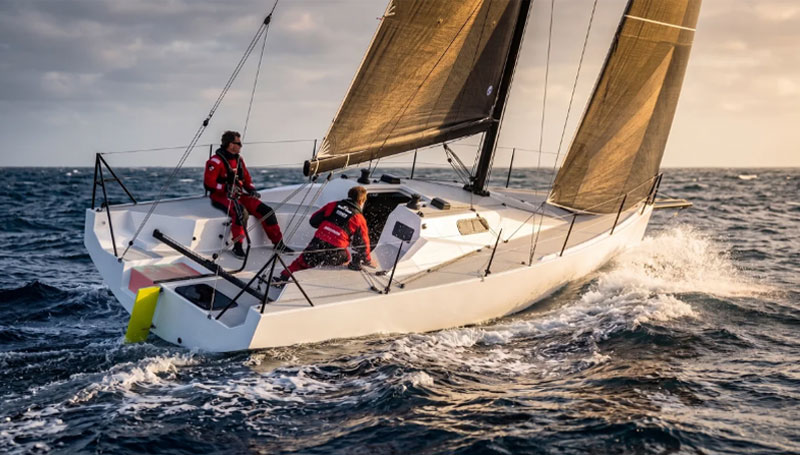
Costiera 355 is a sporty 35-footer developed to combine ORC racing performance with versatility and cruising comfort. The project defines an all-round, configurable platform capable of adapting to different sailing programmes while maintaining its architectural and performance principles.
Design Criteria
Costiera 355 is a project by Cossutti–Ganz Yacht Design, developed in close collaboration with the Costiera Yacht shipyard in Fano from the earliest stages of definition. The joint work between the design studio and the shipyard covered the overall configuration of the yacht and the coordination of naval architecture, design, construction solutions and functional requirements.
For Cossutti–Ganz Yacht Design, one of the main design challenges was to define a platform capable of maintaining its own technical and design identity while allowing different levels of configuration. The objective was to precisely define the yacht’s fundamental parameters — from naval architecture to performance, from structure to functional solutions — and to establish, within this system, the possible range of adaptation for different configurations.
The yacht was developed as an all-round project, with a programme encompassing racing, passages and cruising. The starting point was to define a platform with competitive performance characteristics in C ORC class, without specialising the design for a single wind condition or type of use. The objective was to achieve a yacht with adequate stability upwind, strong acceleration and planing ability on reaching and downwind legs, while remaining responsive in light-air conditions.
Displacement, sail area and righting moment were therefore defined as part of an integrated system, seeking a balance between performance, versatility and the yacht’s behaviour in different weather and sea conditions.
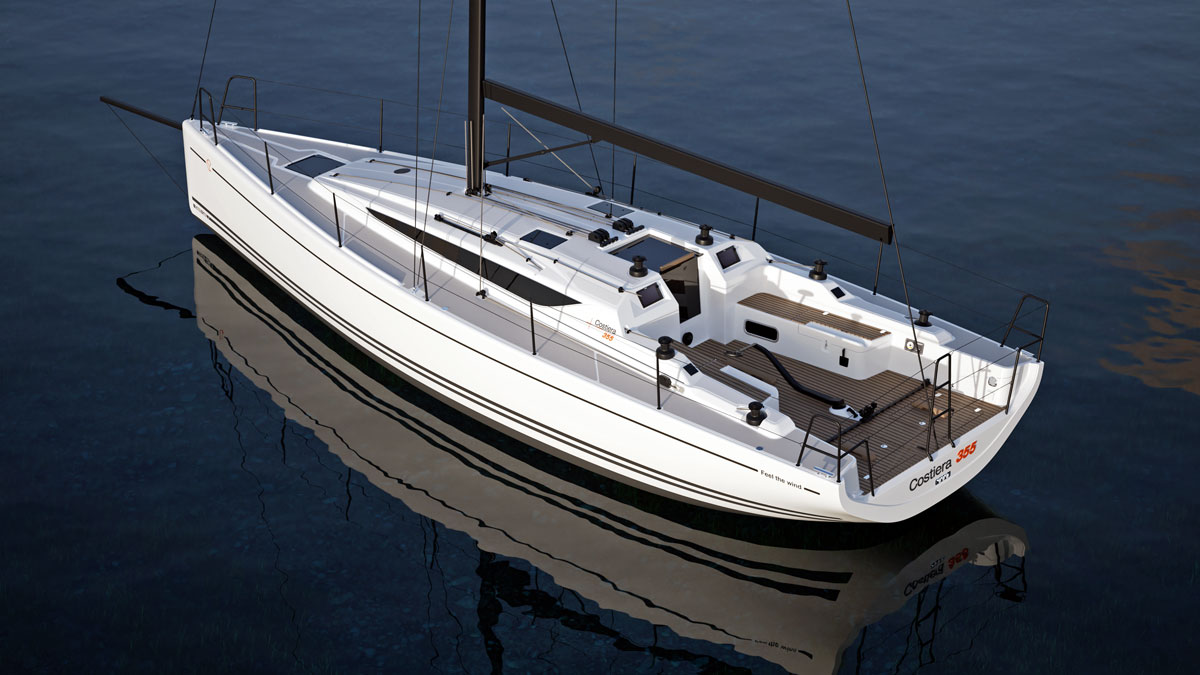
Alongside performance requirements, habitability and cruising requirements were integrated into the project from the outset. The overall architecture therefore combines a large, open-aft cockpit with functional solutions and volumes designed to accommodate extended sailing and periods on board. The hull configuration, sail plan, appendages, cockpit layout and interior arrangement were developed within the same design framework, avoiding a clear separation between a racing and a cruising configuration.
The result is a 35-footer with a sporty character, yet sized and organised to be used effectively beyond the racecourse.
Overall Architecture and Functional Solutions
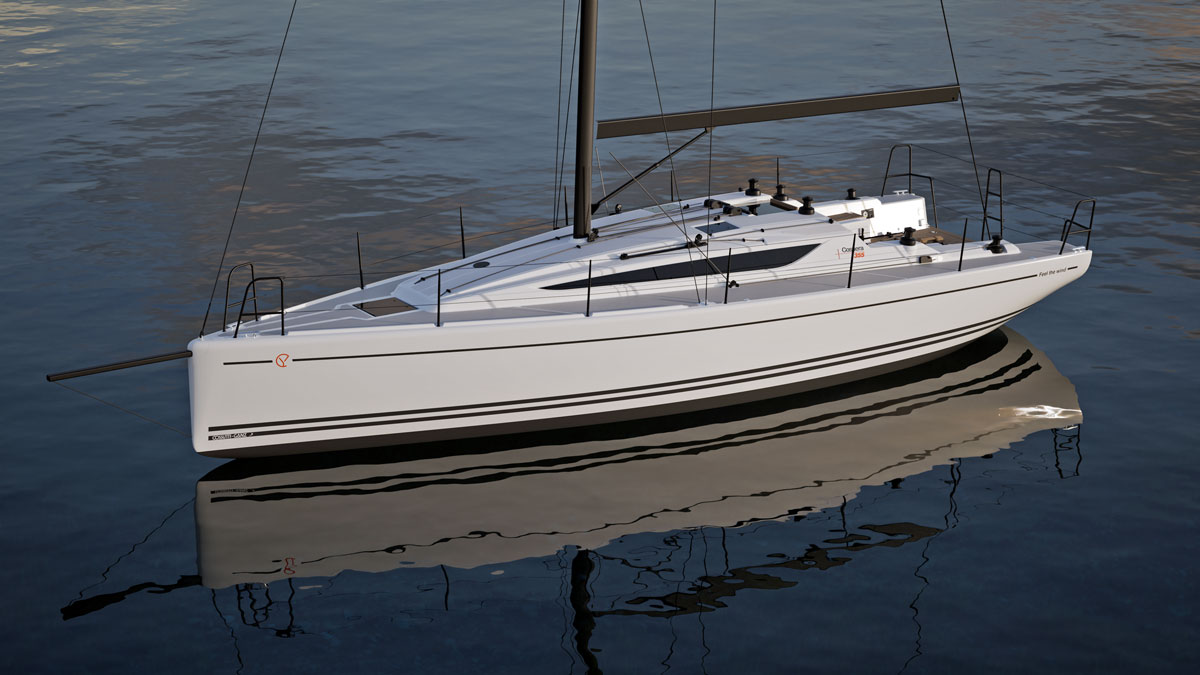
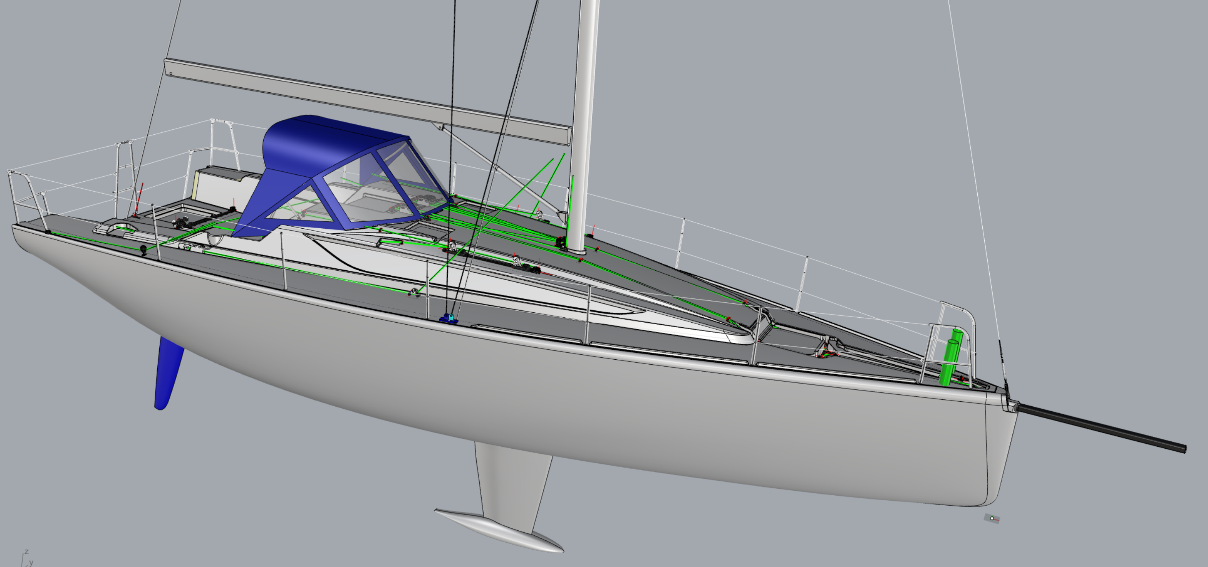
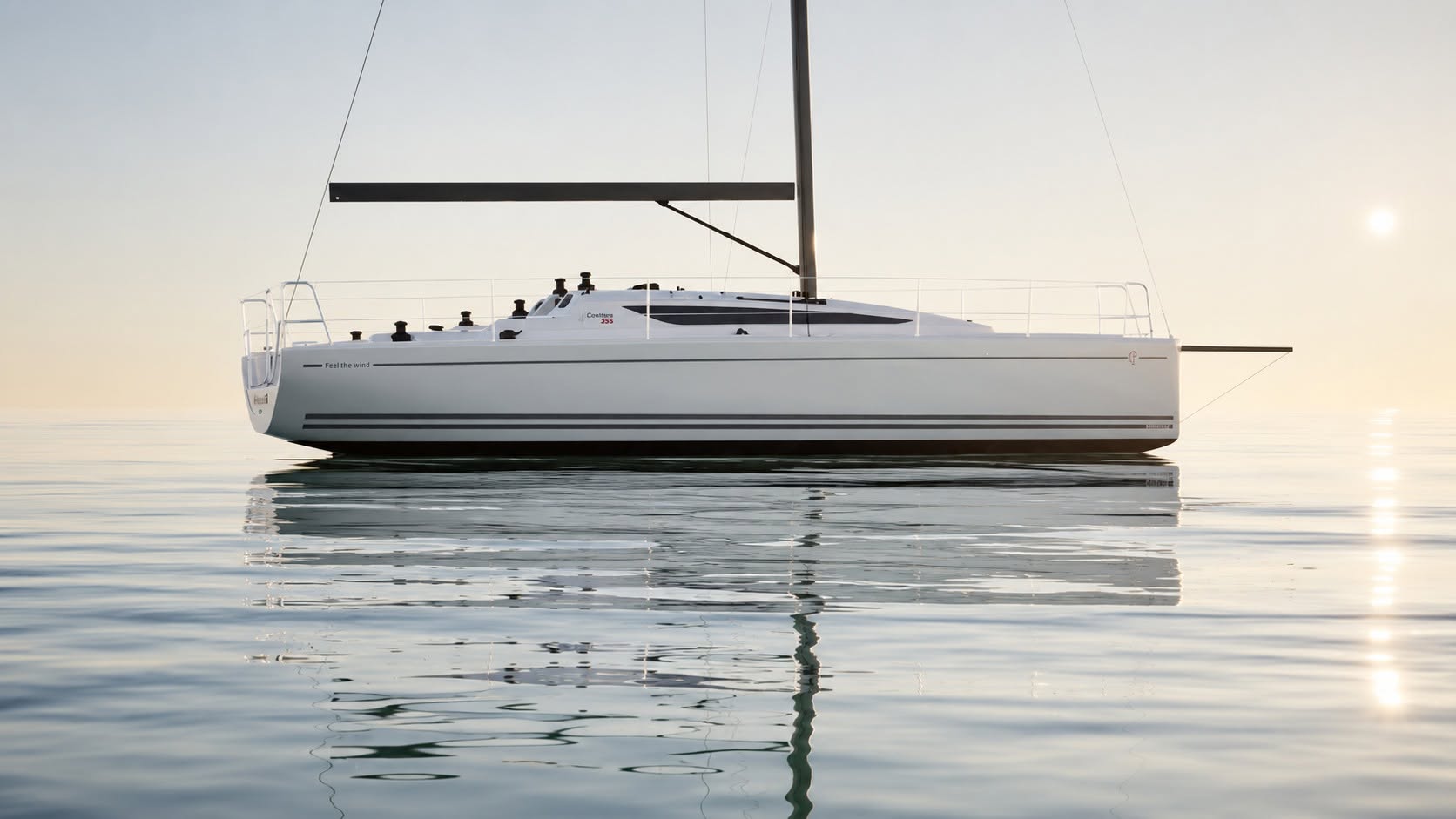
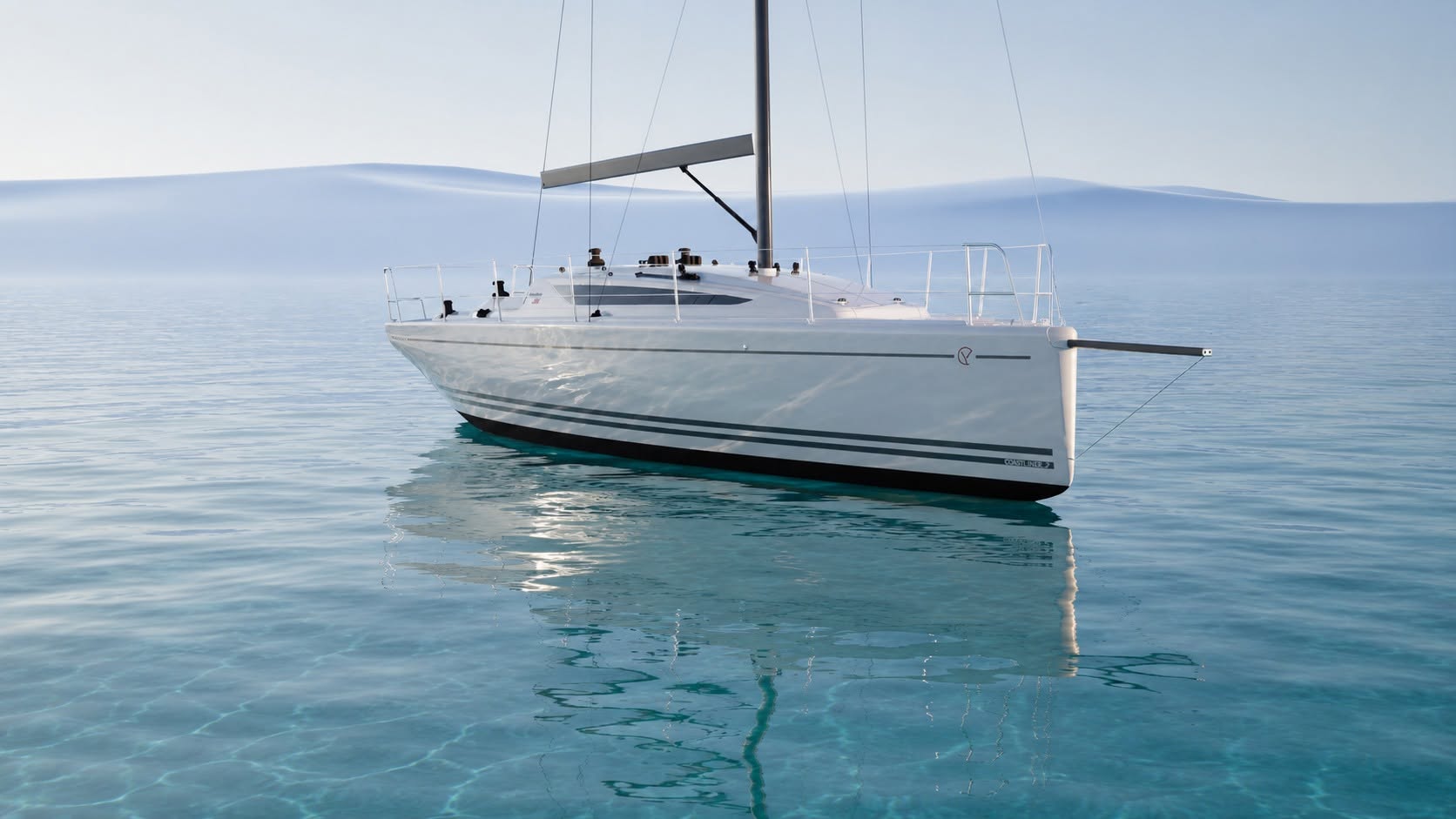
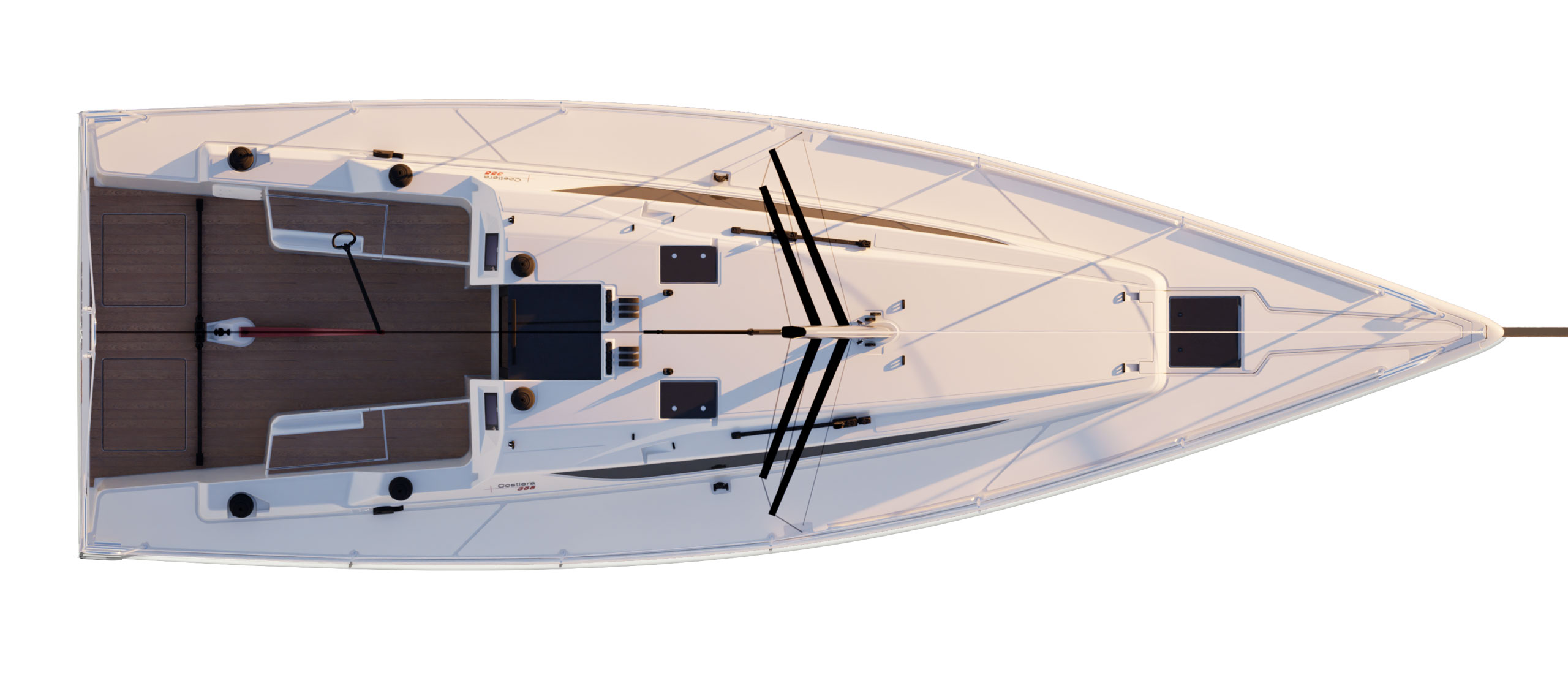
The deck configuration was developed to maintain the possibility of adapting the yacht to different programmes of use without altering the overall design concept. Costiera 355 has an overall length of 10.75 metres and was developed with different deck and rigging configurations in mind.
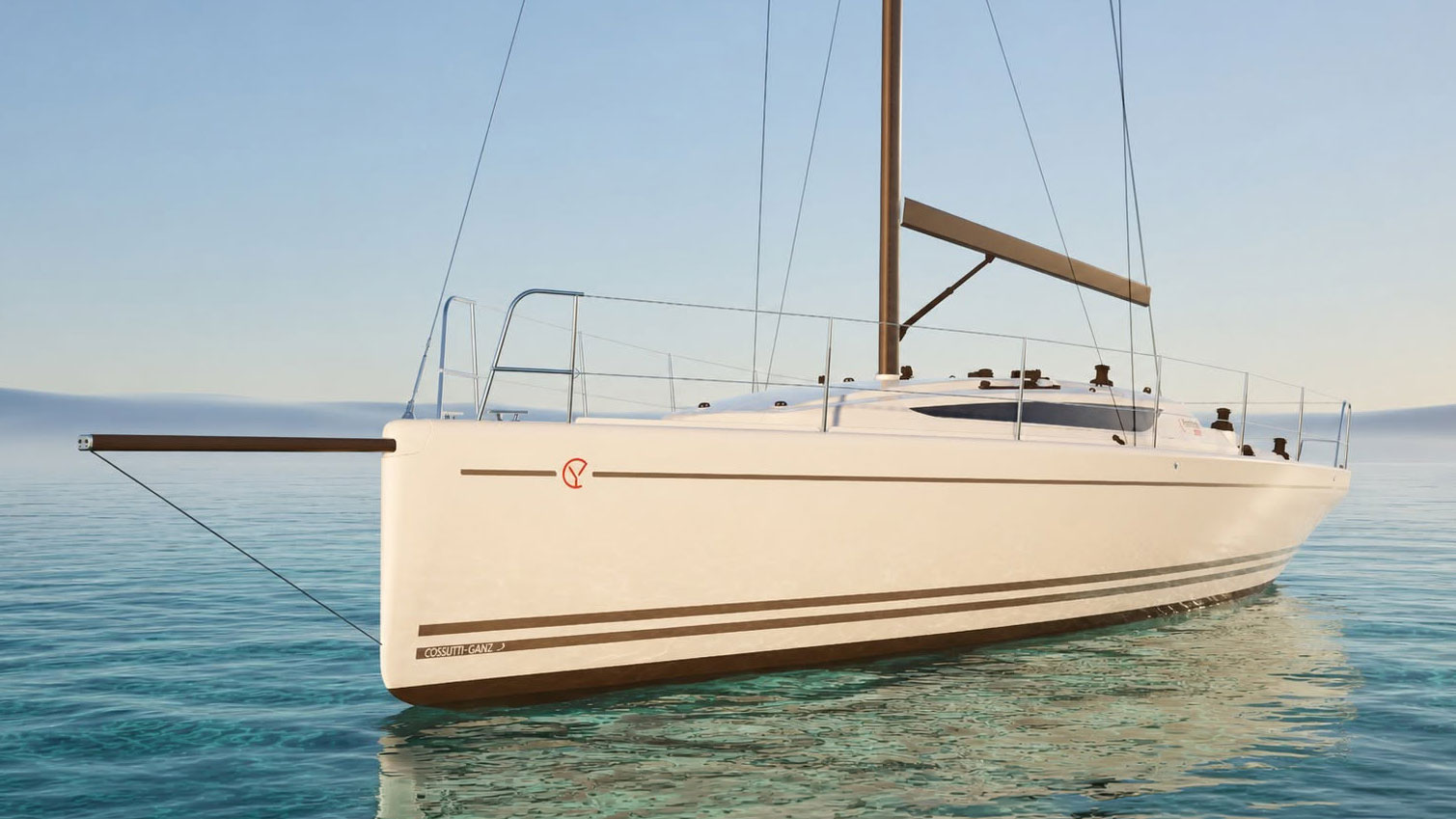
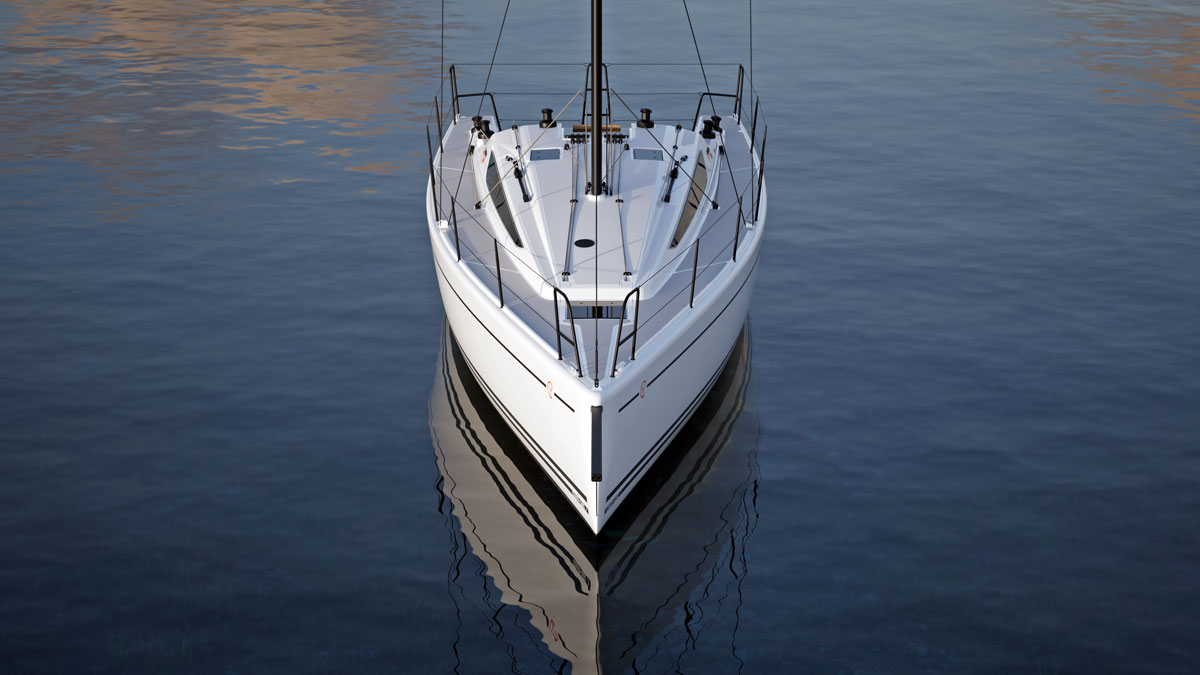
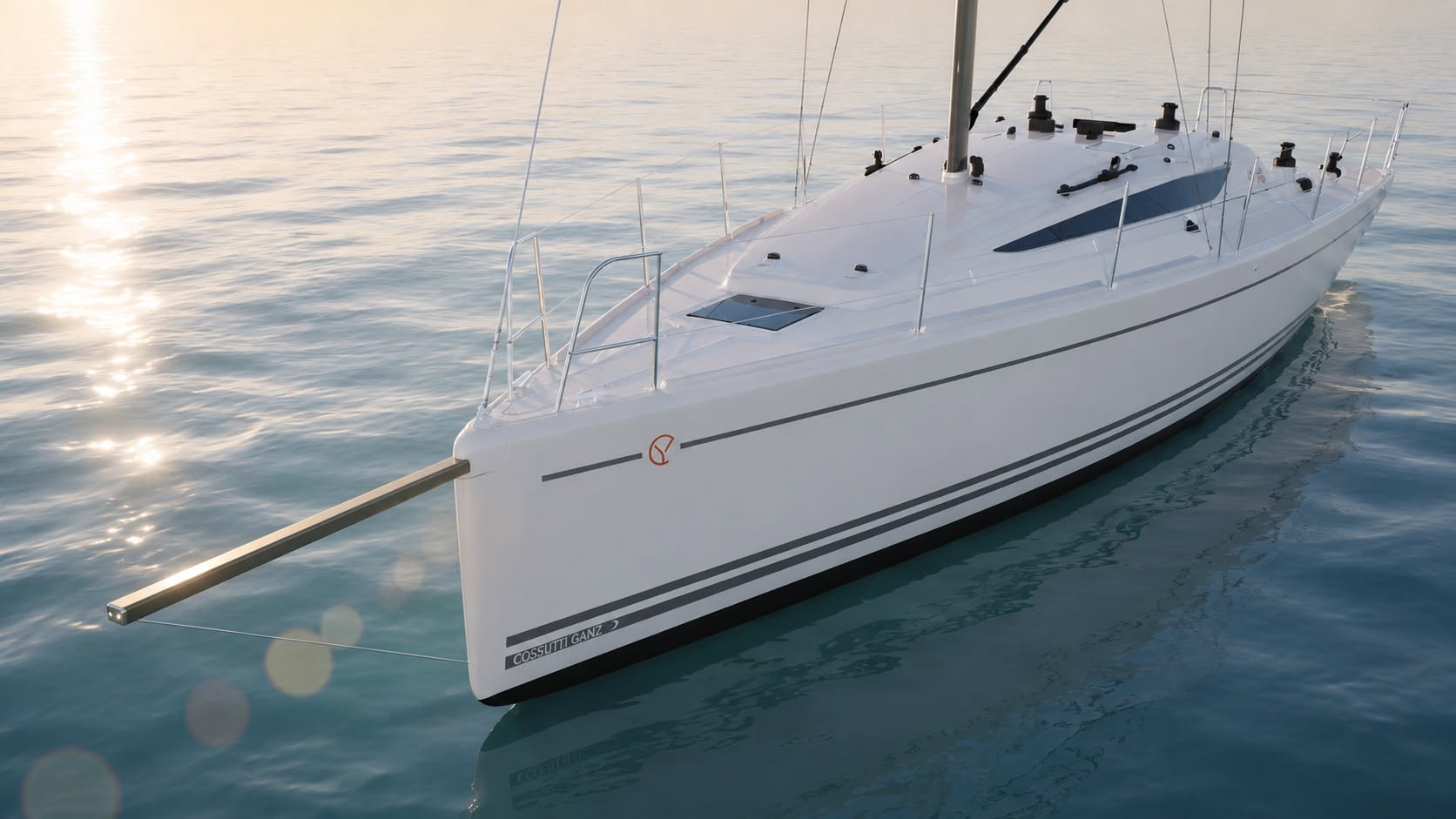
The retractable bowsprit allows the sail plan to be extended while keeping the yacht’s overall length contained. The system is housed in a recessed external casing, avoiding interference with the interior volumes and preventing water from entering the hull. For a configuration more oriented towards cruising, the bowsprit can be replaced by a pulpit with an anchor roller.
The steering arrangement follows the same principle. The tiller represents the more direct configuration for sporty use, while the design allows for twin wheels for configurations with a different balance between steering, cockpit organisation and cruising use.
The hull is built using vacuum infusion of glass fibre and vinylester resin. The construction integrates the structures required to define the yacht’s overall architecture, with the primary structure and interior elements developed as parts of a single system.
Performance, Sail Plan and Appendages
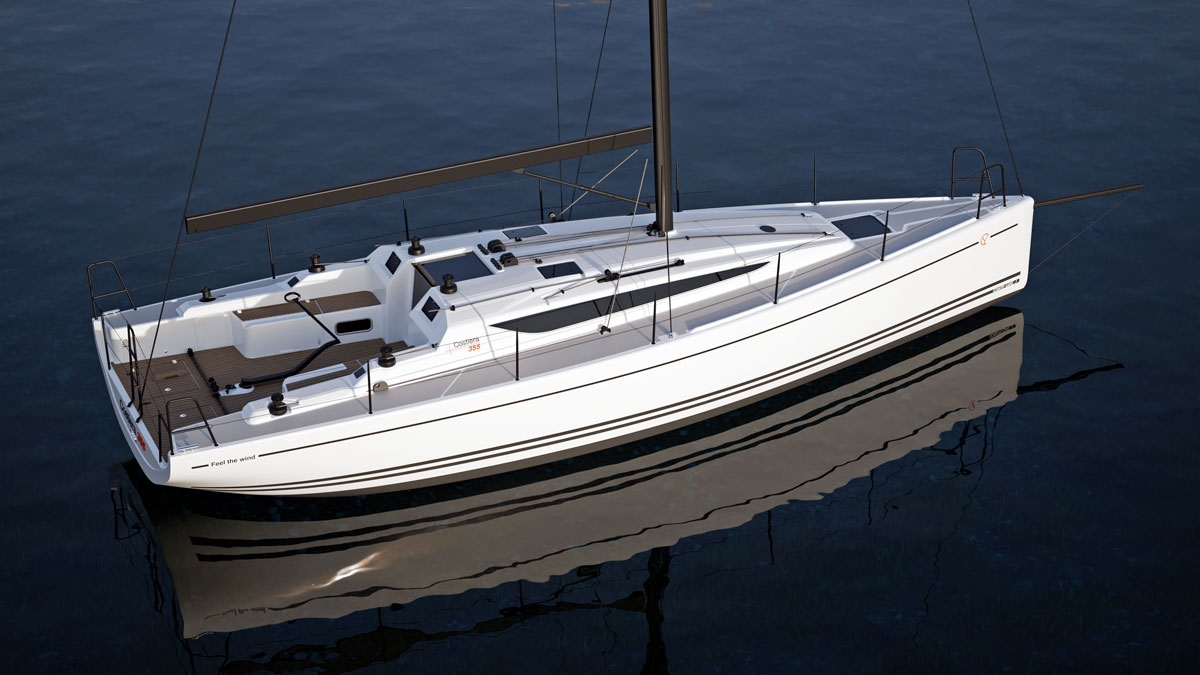
The definition of the yacht’s main parameters started from the search for balanced behaviour in different sailing conditions. The performance reference is C ORC class, with the objective of achieving a yacht that is stable upwind, capable of accelerating and planing on reaching and downwind legs, and sufficiently responsive in light-air conditions.
Displacement, sail area and righting moment were therefore developed as interdependent parameters: the objective was not to maximise a single characteristic, but to define an overall balanced behaviour.
To adapt the yacht to different conditions and racecourses, the weight of the keel bulb can be adjusted, modifying the relationship between displacement and righting moment and seeking the most appropriate compromise also in relation to rating.
The sail plan comprises a 41.1 m² mainsail, a 34.5 m² jib and a 125 m² gennaker. The configuration can be developed with either gennaker only or with both gennaker and spinnaker.
The standard version features an aluminium mast, while configurations with a carbon mast and boom are also available.
The keel fin consists of a high-strength stainless-steel structure. Its hydrodynamic profile is formed by a high-density PVC fairing CNC-machined and subsequently laminated in glass fibre, then checked against a jig. The bulb is made of lead.
The possibility of adjusting these parameters allows the overall design concept of the yacht to remain unchanged while adapting its performance level and behaviour to the characteristics of each individual configuration.
Construction and Structural Architecture
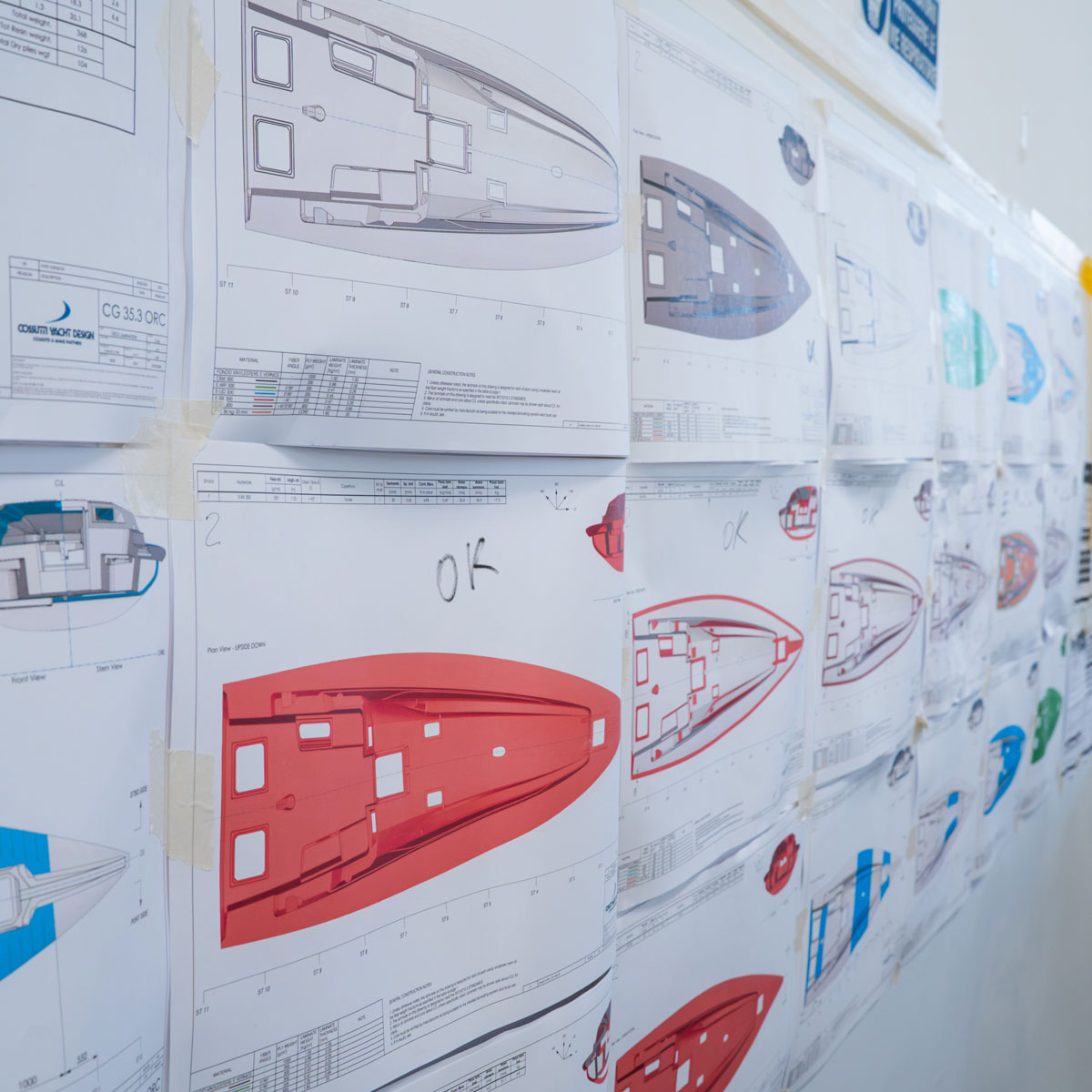
The structural architecture of Costiera 355 was developed by defining the load paths generated by the keel, rig and appendages through the hull structure. The design approach is not to resolve individual load introduction points through separate local reinforcements, but to ensure continuity of the load path through an integrated structural system.
The steel keel structure is one of the main elements of this system. Loads generated by the keel and by the mast support area are collected and transferred to the primary structure through the backing plate and the structural elements integrated into the hull. The same principle is applied to rig loads. At the shroud attachment points, a dedicated structural frame transfers the loads towards the main structural system.
The interior structure directly contributes to the continuity of the system. Structural elements integrated into the interior architecture, together with composite structures, complete the load path, preventing individual areas of the hull from working as isolated elements. The steel structural grid in the bottom of the hull constitutes the main structural element in the area subjected to mast and keel loads.
The definition of the system was supported by FEM analysis, used to assess the distribution of stresses and deformations and to identify the most highly loaded areas. Particular attention was paid to load introduction and transfer points, connections between different structural elements and discontinuities in the hull architecture.
The structural sizing was developed in accordance with the applicable ISO standards, integrating regulatory verification with analysis of the overall structural behaviour.
Cockpit and Deck Layout
The cockpit was developed as the yacht’s main operational area, integrating requirements for steering, manoeuvre handling and cruising use.
The deck layout features jib tracks positioned on the coachroof, defined to achieve an appropriate sheeting angle under different sailing conditions. The single backstay configuration uses a Magic Wheel system for adjustment during different points of sail and manoeuvres.
The cockpit benches incorporate footrests and the main service volumes. A large locker is located on the starboard side, while the life raft is housed on the opposite side. The cockpit can be equipped with a sprayhood protecting the seating area close to the coachroof. The cockpit sole and benches can also be finished in teak.
Interior Layout
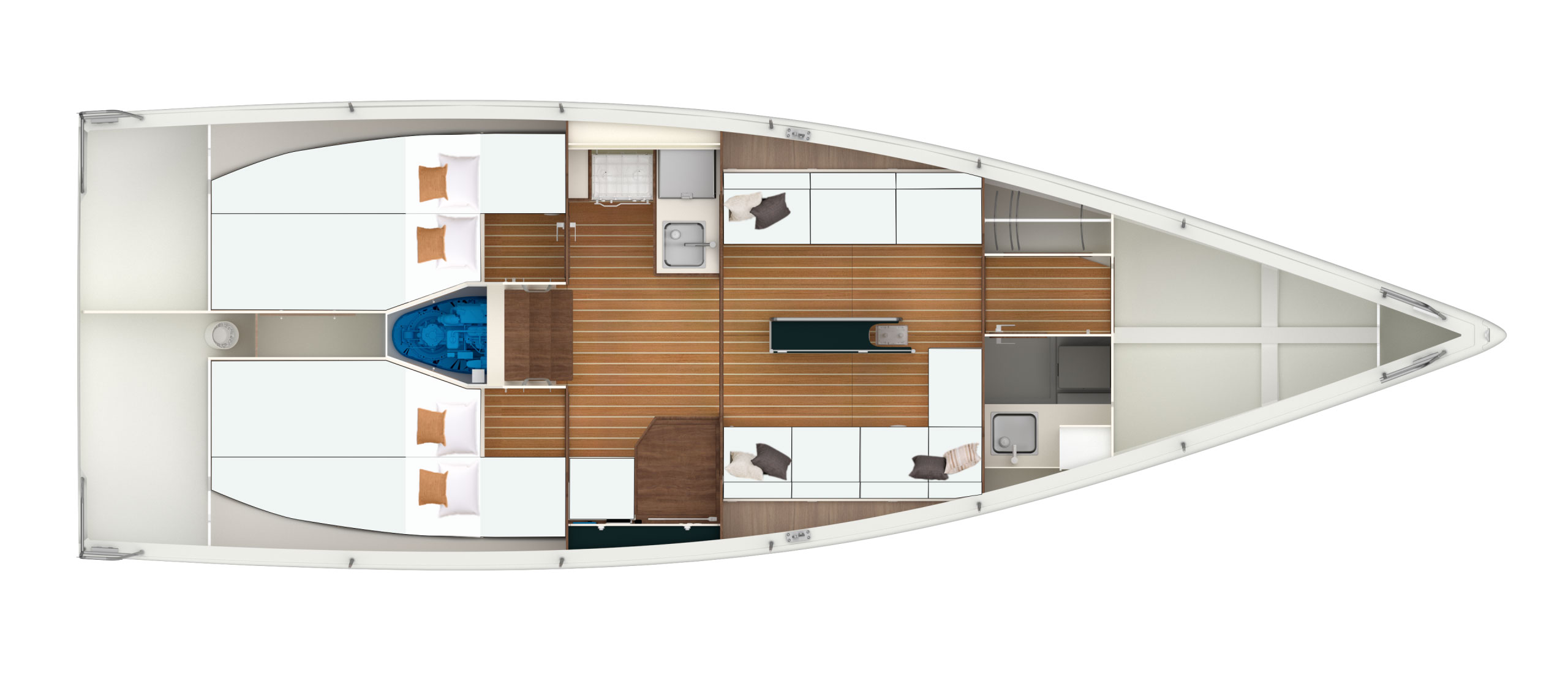
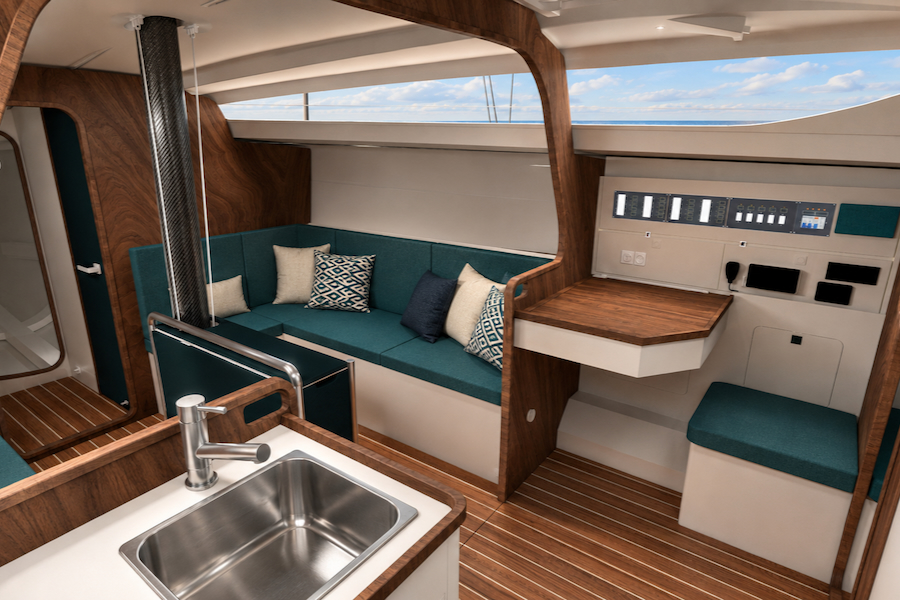
The interior layout comprises two aft cabins, an L-shaped galley, a navigation station opposite, a central saloon with table and opposing settees, and a forward heads.
The forward volume has been conceived as a multifunctional space. In the more race-oriented configuration, it can be left open and used as a sail locker, while it can be converted into a third cabin either during construction or at a later stage.
The interior design also retains a degree of configurability, with the possibility of choosing the wood species and finishes.
The First Unit: From the Original Brief to the First Build
The first Costiera 355, scheduled to be launched in autumn 2026, retains a number of characteristics directly related to the original brief from which the project originated. The initial requirements included participation in ORC racing, with particular attention also paid to racecourses and weather and sea conditions typical of Northern Europe. This contributed to defining, for the first unit, a balance between upwind stability, acceleration and planing ability on reaching and downwind legs, and responsiveness in light-air conditions.
In particular, the first unit features a carbon pre-preg mast and bowsprit. The rig includes a single backstay and a long crane, sized to accommodate a mini square-top mainsail with a headboard width of approximately 60–65 cm.
The first unit also features a specific rudder configuration, with carbon blade and stock, while the standard configuration provides a fibreglass rudder blade with a stainless-steel stock.
The cockpit development also involved the assessment of different solutions through direct collaboration with the owner and physical verification of the operating conditions. A full-scale cockpit mock-up in sailing trim was therefore produced to assess crew positions, manoeuvre handling and the ergonomics of the main support points.
The mock-up made it possible to refine the configuration of several elements before final definition, particularly the geometry and positioning of the footrests. This process allowed the operational configuration of the first unit to be adapted to its intended use, while maintaining the architectural and structural principles of the overall project.
These aspects define one of the essential characteristics of the project. They clearly distinguish the adaptation of an individual unit from the development of the overall architecture: the Costiera 355 platform remains defined, while certain aspects of its configuration are further developed and calibrated according to specific modes of use, following the typical workflows of the Fano-based shipyard, which specialises in highly customised yachts.
Design and Configuration
Costiera 355 embodies a design approach in which defining a platform does not mean standardising the yacht.
For Cossutti–Ganz Yacht Design, the work consisted in defining a system with precise architectural, performance, structural and functional parameters, while identifying the elements that can be modified to develop different configurations.
The first unit represents the first practical application of this approach. Choices concerning the rig, appendages, materials, steering configuration, cockpit organisation and interiors are developed within an already defined architecture, without altering the fundamental principles of the yacht.
The result is a project capable of maintaining design and technical continuity across different builds, while allowing each individual unit to be calibrated according to its specific mode of use and the owner’s requirements.
Copyright © Cossutti – Ganz Yacht Design – All rights reserved.
Specifiche Tecniche
| Project | Cossutti Ganz Yacht Design |
| Builder | Costiera Yacht |
| LOA | 10.75 m |
| Beam | 3.55 m |
| Draft | 1.98 m |
| Displacement | 4841 Kg |
| Sail Area | 75.6 sqm |
| Mainsail Area | 41.1 sqm |
| Jib Area | 34.5 sqm |
| Gennaker Area | 125 sqm |
| Engine | 29 cv |
| Fuel Tank | 70 l |
| Water Tank | 80 l |